Show Posts

This section allows you to view all posts made by this member. Note that you can only see posts made in areas you currently have access to.


Messages - Evan_B

Pages: [1] 2 3 ... 146
1
Honored to have had my email read during the episode. Congratulations on your achievement! Such a fun “NWR Retroactive,” so to speak, and great to hear the thoughts and feelings of all the hosts about what the show has meant to them. Also, congrats to Johnny!

2
General Gaming / Re: Rolevember 2026: The Backlog of Time
« on: November 17, 2026, 10:14:08 AM »
I have to give credit to Monolith Soft for frequently shoving gameplay mechanics from adjacent genres into their games. Fortunately, I can also lambast them for it, too!

I think the easiest comparison to make would be the online raids of XCX, which are really sort of shallow and become inconsequential with a modest amount of build optimization. It doesn’t feel very necessary as an inclusion and I like the Squad Missions concept a lot more, as it makes you feel like you’re a part of a larger organization.

XC2’s gacha elements have the one-time novelty of adding variety and uniqueness to a playthrough, but the excessive grind and the lack of transparency on how some rare blades are random pulls and others are locked to sidequests is frustrating. There’s also the time-attack/special missions of the DLC that feel semi-related to XCX’s raids, and I guess we also have the… I don’t know, Musou-style blade missions in the NS2 edition? I guess I need to get around to checking them out at some point.

XC3’s roguelike mode is the DLC element I’ve engaged with the least, despite my enjoyment of roguelikes as a genre. I just can’t fathom why or how you would translate the Xenoblade experience/combat mechanics to a satisfying roguelike experience, and from what I hear it’s heavily centered on min-maxing, which I suppose is par for the course with all Xenoblade games but not for an exploration sicko like myself.
Ocarina’s playtime just felt perfect and I really want to go through another game of similar length, which probably won’t be an RPG.

How long was your playtime with OoT?
A Zelda-Notes-ed 100% completion run put me around 25 hours and some change. I’m sure some of that also came from getting to grips with how Zelda Notes splits maps between time periods.

I don't need to play and complete Wario World for like a 4th time and I've already got a game plan I've talked about and yet here I go making myself now want to play some more of that game. (It does feel great to have Wario toss away a baddie and tell them to "Have a rotten day" when sending them flying.)
…I never imagined being able to complete Wario World more than once.

3
General Gaming / Re: Rolevember 2026: The Backlog of Time
« on: November 16, 2026, 11:55:46 PM »
Soul Voice is so broken (if you arrange it correctly) that you can have a whole team of DPS (maybe one tank) and never worry about heals. Though Arts Heal upgrades on equipment will ease the pain.

XCX’s battle system is a joy and I’m frankly disappointed we never got bespoke improvements to its best features. Ranged/melee equipment, height bonuses, the big Talent Art system you’ve yet to hear about… heck, I even think Soul Voice is worthy of love.

4
I’m a bit curious about going back and doing some of the boss trials, especially since it’s literally the only thing I have left. I agree on Zelda Notes: while having a game-guide-tier map with every unlockable was nice, I didn’t engage with any of the other features and I likely would have preferred the maps in-game as some sort of Rupee sink, especially since I always felt like I had too much money in the game.

5
General Gaming / Re: Rolevember 2026: The Backlog of Time
« on: November 16, 2026, 10:53:29 PM »
It’s been roughly a week since my last update, and strangely enough (or perhaps not), I haven’t made all that much progress in any of my previously-listed RPGs. I guess I’m just not in the mood, which makes me empathize with Khush’s thoughts at the moment.

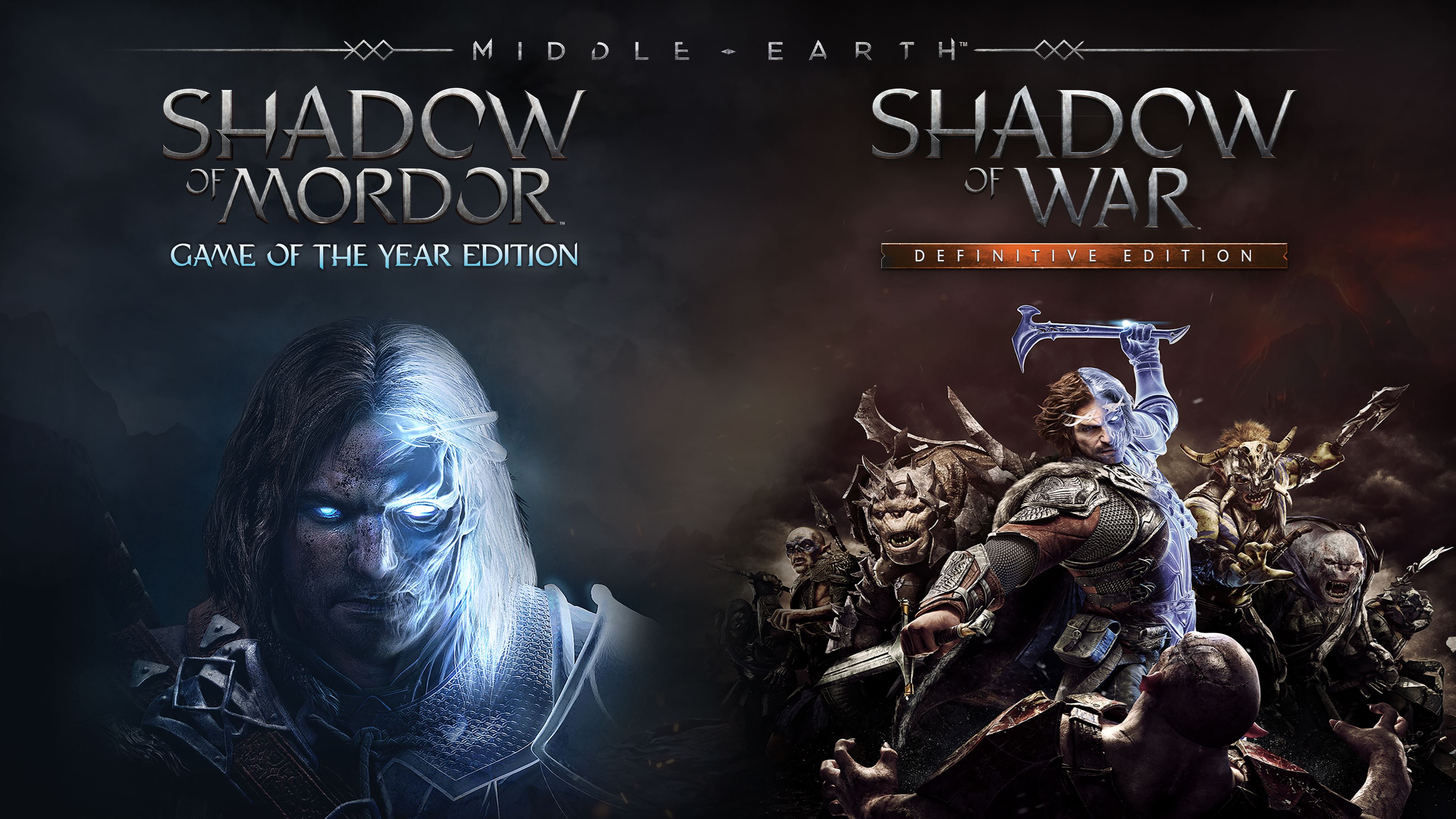
In case you didn’t hear, I completed the very—much-not-an-RPG in the Ocarina of Time remake, but pivoting from that game, I’ve… found myself back in Mordor. I guess the presence of a skill tree might warrant its inclusion here? You do consistently gain experience points for kills, micro quests, and story quests, so I’m going to count it. I don’t love that you get heaps of experience from completing main quests- I don’t think that’s a particularly role-oriented choice, but I think it’s designed to allow the player to get deeper into the game’s systems.

With that said, I’m a bit surprised that it’s only in the third quarter of the game that Shadow of Mordor presents one of its most absurdly delightful mechanics: branding and developing your own Orc army. There are parts of the skill tree that are locked off to the player until they’ve participated in certain events… but the story only occasionally justifies these limitations, as if to say “your actions prior to this wouldn’t make sense if you had access to these skills, because I said so.” It’s frustrating, because Tallion faffs about on several occasions while on his quest for revenge, both for his own amusement and because he’s attracted to a lady. Even the narrative doesn’t feel like it has enough momentum to sustain the white hot rage of his vengeance, so you get to go ride Caragors with your Dwarf pal and save the damsel in distress.

On the other hand, it does mean that this is a brisk game, all things considered”. The only real fluff you have to engage with is that of the main quests, while much of the side content is for the sake of exploration or your own personal aspirations to become competent with the sword, bow, or “dagger.” Or if you want to free some slaves. To be honest, that’s where the real tutorialization and difficulty can be found in the game, as you’ll take on more difficult challenges in the same arenas that feature in the main story. It’s a bit unfortunate that one dagger side mission happens to be a more difficult version of a main story quest.

…anyway, I’m at a bit of a crossroads right now. Ocarina’s playtime just felt perfect and I really want to go through another game of similar length, which probably won’t be an RPG. Despite my complaints about Shadow of Mordor, I do really want to play the sequel as I’ve heard it’s superior in many ways. I really want a nice trim RPG experience and I’m worried just about anything in my backlog is going to be a bit meatier. Ys X is taunting me as a good example. People keep telling me Dragon’s Dogma 2 is only around 30 hours but I find that so hard to believe, though that might just be my own unwillingness to complete it.

I suppose I could go back to one of my Zeboyd RPGs.

6
The item quick select works better here than it did in the Breath and Spirits of Wisdom games, but I wonder why they didn't just give us more quick access item slots. You have 2 shoulder buttons that BOTH bring up the same quick select menu, and I feel like that's not the only redundant button usage that could have been trimmed back. Like, maybe L could be held to run instead of constantly holding A, or just making it a damn stick click like most games. And seriously, what is Nintendo's obsession lately with trying to make "X=Jump" a "thing"? "B" is, and will always be "jump". At least you can swap the 2 buttons like in Tears.

Speaking of the dash, it feels like Link barely moves any faster using it than not. I could also take or leave the manual jump in general. I don't really feel like it adds anything aside from extra steps now to do the overhead jumping attack (which you thankfully can alternatively trigger with a stick movement + A).
I understand the frustration in being unable to equip multiple side-weapons simultaneously, but I really feel that the game is just not designed for access to multiple tools. The exception might be the hookshot, which just feels beneficial to have queued up for exploration in general, but so many items are able to replace the function of others (the megaton hammer just making all explosives redundant) that I didn’t really find the need to switch back and forth all that much.

And I guess I’m a madman, then, because I found the jump button to be my route to accessibility. I absolutely hated how many positioned jumps you had to make in the original and 3DS version and it should come as no surprise that the Shadow Temple was the one that broke me.

Visually, I like how some areas look and don't like how others do. Hyrule Castle switching from pre-rendered backgrounds to a full 3D environment is just an objective improvement. The town feels much more lively now. Likewise, I think the updated stealth section in Hyrule Castle is better designed here than it was on the N64, and it does a better job of conveying that you are moving through an environment rather than just a few one-off guard patrols.

I don't like the very Breath of the Wild-esque decision to stick all these goddamn ruins all over Hyrule field to make the area feel more "busy" now as the devs expanded the area out to feel more "modern". There's enough actual hidden stuff in that area without cluttering it up with cosmetic fluff.

In general, I like the new designs for the interior environments, but I'm really mixed on the character designs. Young Zelda just plain looks weird now, particularly in her eyes, and I didn't think it was possible but Saria seems somehow less expressive than she did in her N64 incarnation.
I found the environments to be fine, and I suppose I’ll need to take another loop around the original Hyrule because I didn’t feel like there was a propensity of ruins. While I agree somewhat on young Zelda’s looks, she grows into them quite well, and I think Saria gets more time to emote in her second appearance. Hyperbolic statements aside, I understand that the art style has mixed impressions and I don’t want to say my feelings are more right than anyone else. I think the disparity in the detail among NPCs is the real sticking point, as I do think characters of greater import just have higher amounts of detail, which is a bit disappointing.

Finally, the game's voice acting is getting a lot of flack online. In general, I'm fine with the dub (though it sounds like Matt Mercer's Gannondorf hasn't gotten any better since his pretty bad performance in Tears of the Kingdom. I blame that on the director), but my main issue with the voice acting is that there's basically no point to it. Nintendo rounded up some pretty big names in the English dubbing scene for this game, only to have them voice very few actual lines. 90% of the dialogue in this game is just the same tired "character makes a noise or breathes" *wall of text* presentation we've seen in so many Nintendo games over the years…

…I feel like if you're going to have voice acting in your game, you should actually commit to having voice acting in your game.
I am glad I’ve avoided the online vitriol. I had no issues with the voice cast other than Matt Mercer’s Ganondorf really just having no range whatsoever. The character model really sells the overall vibe more than his performance, which is saying something. But I just can’t believe that the people who are critical of these voice performances are making those arguments in good faith, or that they’re particularly qualified to judge voice acting, especially in an age where (questionable) anime and game voice acting are rampant. That’s just my opinion.

I do remember the original game having a bit more teeth than this version, and some reviews out there seem to confirm a loss of spikes in some boss arenas. However, much of the conversation about puzzle complexity and difficulty seems to be hearsay at best and overreacting at worst. I would be curious to hear the thoughts of others as they play, though, because while I found the whole experience quite cozy, it was far from frictionless- just not in the combat.

I just got the game in the mail but I'm disappointed that Master Quest isn't unlocked from the get-go and seems to need a "DLC unlock". Maybe it unlocks with the Majora's Mask remake or Amiibo (data mining confirms). It would be insane if they're charging money for something that came included with 3ds version and was free on the Gamecube.
I hope Nintendo is going the “hey, here’s an update” route that they have gone with Star Fox, but the addition of Master Quest seems a bit more ambitious than multiplayer map updates. Either way, Nintendo has had more egregious DLC additions on the Switch 2, so I could imagine dipping into the well to come back to the game again if it were offered, even if it sucks it’s not packed in.

7
I will respond.

Tomorrow.

8

I am fully aware of Ocarina of Time’s status as one of the best games ever made.

That doesn’t stop me from hating on it.

I’ve heard the arguments, and yes, I suppose you did just have to be there. For context, the first two Zelda titles I ever completed were Minish Cap and Twilight Princess. By the time I played Ocarina of Time, and I mean, truly got my hands on it, I was like, “this is what everyone lost their minds over? A poor man’s Twilight Princess...?”

Feel free to clown on me. I was young and foolish. To me, the ills of Ocarina of Time were the very innovations it sought to bring to the series in a 3D space: z-targeting reducing most combat scenarios to a waiting game, a context-rich action button that did everything except jump, and grappling with wonder and fantasy using rudimentary 3D graphics. The 3DS version didn’t help these issues much, though it painted the game's textures with colors and detail that hearkened more closely to the character art used to promote the game back during its release. If anything, the 3DS version did as much to repel me with its own limited button number as the original had.

Many of these things that didn't amuse me about the OG 3D Zelda were improved or rectified in subsequent games: more buttons for control, easier inventory management, less 3D platforming, and all that remained of Ocarina's foundations smoothed over with deliberate aesthetic and environmental choices. It is my opinion that Ocarina of Time failed to remain timeless, with the franchise's team heightening its dated nature with each continuous draw from its well of tricks. Wind Waker had beautiful art and a tighter narrative. Twilight Princess was... well, Ocarina of Time, but more tightly designed. Skyward Sword was... a beautiful mistake, something that should be studied as a crisis point between classic 3D Zelda formula and its open-world future.

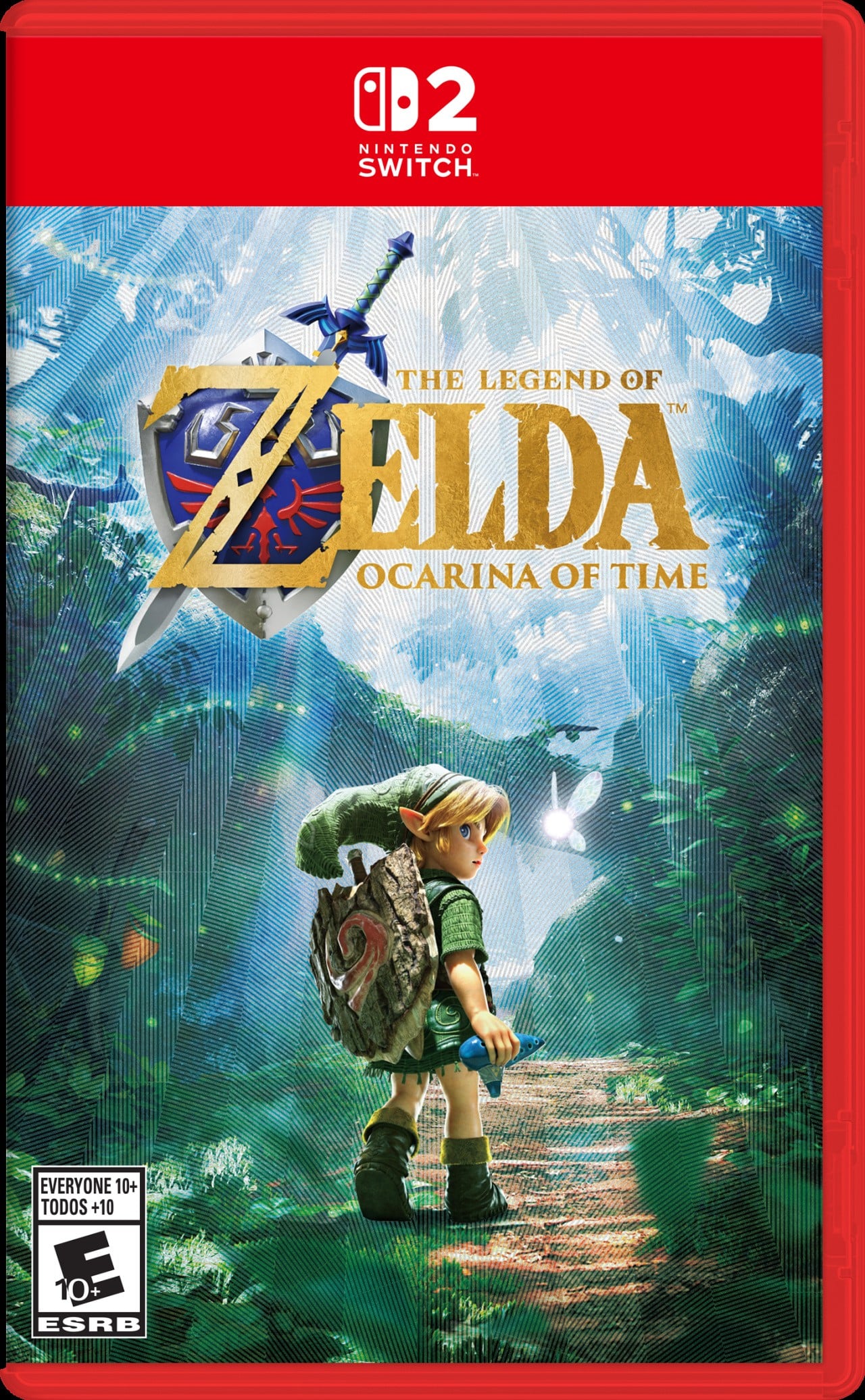
So what can a remake of Ocarina of Time do for a game that was ambitious, but shows its age? Having cleared my save file with 100% completion over the past four-day weekend, I have thoughts.

Across a 25 hour and change playthrough, I have been enjoying the majority of my time with the remake. Much of why this version of Ocarina of Time is clicking for me comes from its modernity. I feel the other, more polished Zelda titles here, not because of their shared DNA but rather their improvements layered retroactively into the fold. Motion/gyro aiming is a blessing, the jump button is so fundamentally experience-saving, quest-tracking is a boon, and a bigger wallet makes me happy. How much less things feel like vague geometric representations of things and that dialogue is ever-so-slightly enriched as to better sell the toylike fantasy whimsy of this world.

But there are aspects of this game that still rub me the wrong way: fairy notes feeling superfluous most of the time... except when they're not, and they are required reading for puzzles. The over-complicated nature of some of the quest-lines, and the subtle evil of some of the hidden collectables and dungeon elements. Sometimes, the environments are so highly detailed that it is hard to discern essential puzzle elements- though across my entire playthrough, I only encountered three instances where I felt this was the case. I wonder if my breezing through the first two acts of this game was because I've tread this ground previously, my preexisting familiarity with the series' 3D dungeons, maybe both? But as I got into a few of the later, newer dungeons (to me), I found myself scratching my head at a few points wondering where the next switch to be tripped might be.

Zelda Notes feels like a must-have for anyone braving this game's thorough challenges, like heart containers and golden skulltulas: that some of these exist in one time period and not the other is... understandable, but frustrating. I think I probably would have rolled up to Ganondorf (spoilers) a bit more prepared with potions than I was during this playthrough, but seeing as the five great fairies are all relatively easy to access, I would have been rocking reduced damage regardless.

Another thing that feels a bit underplayed here (which makes me wonder how much less it was addressed in the original) is the overarching narrative. I mean, Zelda does admit her fault at the end of the game, but much of your played experience is being spurred on by greater spirits for the purposes of fulfilling your duty. Impa is quick to go along with whatever Zelda says in a way that makes her seem like kind of a dolt. Like, you're not going to second guess the schemes of a little kid at all, Impa? Really? It feels as if fate is conspiring to make the pieces fall into place from square one, and I think it would have been a bit more novel if this all truly felt like an evil game of chess rather than Ganondorf just being like "I never could have imagined that the two people who tried to thwart me would have the pieces of the Triforce!"

And another thing that I'm furiously pushing my imaginary glasses up on my nose over: why does the Temple of Time/Sacred Realm/Triforce tomfoolry mythos change so drastically throughout the events of the game itself? First it's "the Sacred Realm will offer access to the Triforce, so let's definitely try to crack that realm open" until its "eh actually if the Triforce is touched by a jerk, it will split into three pieces. Also you got frozen in time for seven years because Ganondorf is a jerk." It feels like there was a wont to explore a richer depiction of legend and storytelling and folds upon folds of myths and magic here that is not explored enough, even with the extended cutscenes that this game offers.


Which are good, don't get me wrong. Good and not great. I like these more extended moments of the Sages being aware of the scheming of Ganondorf. I like their introductions, their voice-acted personalities- with maybe only one or two awkward line-readings here. But it's just a little bit more added in ways that are inconsequential to the original script- which I suppose I'm okay with, but I guess I just find myself at odds with the original script's narrative conceits a bit more. Shoutout to everything having to do with the Twinrova battle and characters: that rocked.

Oh, and while I might moan about collecting the various doodads throughout the world by having to warp pretty frequently, my playthrough did only take me around 25 hours, so I guess I should give the game flowers for how much unique content it is willing to deliver to players across that time. I was genuinely pleased with stumbling into the Gerudo Training Grounds and finding a whole mini-dungeon of content that was more or less optional. That's in addition to all the little side-activities that yield genuine rewards, something that I feel the open-world Zelda games could maybe take to heart. Give me golden skulltulas, modern Zelda team: those anthills in which they hide also offer spots for magic bean plantings, rather than hundreds of Korok seeds that... expand my arsenal and give me a piece of poop (to be fair, the final reward for your Skulltula hunt has little utility before the final battle). Let me race across the playable space to deliver timed items of import. Let me hunt big Poes in the field for points that amount to decent rewards. Let me give some people masks, dammit, and then give me a mask that unlocks alternate dialogue with nearly every NPC.

Those things are fun.


And so, while some of the busy work does still feel a bit too busy, and some of the puzzles a bit too obscure, and the game is never really difficult in any meaningful way other than the damage inflicted by one's own carelessness, I walk away from this version of Ocarina of Time understanding a bit better why some people might consider it the best game of all time. Those people would have to have it form a pillar of their gaming foundation, to be sure, and in replaying this modern version and seeing how the game itself is a foundation for all of the Zelda titles that I have played and enjoyed since, I suppose I do get it. Much like Link at the end of the credits, I was there without actually being there.

I also think it's very important for me to acknowledge the rather beautiful thematic element of time here, not in its laziest implementations (grandfathering in a solution to your problem via time-travel), but the sense of coming-of-age, departure, the challenges of growing, and the bittersweet yet stoic quality of embracing one's duty. I don't always love its implementation with the sages, a few of which don't really get the chance to develop a meaningful relationship with Link and who are all compelled to embrace their duty due to mystical machinations, but their ending monologues tend to sell the overall pathos fairly well. I love it in the manifestation of this game's hero's journey, where Link and Navi are set upon a journey that takes them from their places of comfort as they come to understand the greater world and all the strange and diverse ways it can change a person. Zelda is just as much a representation of this at the end of her journey as Link, and I think its a beautiful thing that she sets back the clock and gives him a chance to live that experience in earnest. I'd like to think everyone comes out of Ocarina of Time changed, if they give it a chance.

One final note: I think that this is a gorgeous looking game, and is perhaps as real as I will ever want Zelda to look. Yes, the facade breaks down as you are introduced to some wilder-looking characters in the back half of the experience, but this game manages to capture realistic environmental textures and structures while also having that aforementioned magical whimsy in all the right ways. I do think that not all character models here are made equal, but they never lean into realism too much in a way that would jeopardize the spirit of the narrative. When these characters do the dumb things that they did in the original game, like dancing to Saria's Song or shifting themselves over to allow passage, it makes sense in a way that such antics just wouldn't fly in something more live-action. I stand by Twilight Princess and Skyward Sword's commitment to these freakish character designs: Zelda should always be fantasy.

...So what do you guys think of the Ocarina of Time Remake, eh?

Edit: Because I know my previous ranking of Zelda games was controversial enough, here’s an updated list!

-Tri Force Heroes
-Majora's Mask
-The Legend of Zelda
-Adventure of Link
-Ocarina of Time
-Link’s Awakening Remake
TAPPED OUT/UnfinishedLINE

17) Oracle of Ages
15/16) TIE: Phantom Hourglass — Spirit Tracks
14) Echoes of Wisdom
13) The Wind Waker
12) The Wind Waker HD
11) Oracle of Seasons
10) The Minish Cap
8/9) TIE: Twilight Princess — Twilight Princess HD
7) Skyward Sword
6) Ocarina of Time Remake
5) A Link to the Past
4) A Link Between Worlds
3) Link's Awakening DX
2) Tears of the Kingdom
1) Breath of the Wild

9
General Gaming / Re: Rolevember 2026: The Backlog of Time
« on: November 04, 2026, 11:33:05 PM »
In attempting to add some alternative perspective to these threads, I’ll try to keep my check-ins to a weekly rate at least, with potentially major accomplishments/developments getting their own updates.

Lies of P
I’ve put more time into this game than I expected this week, more out of stubborn persistence than anything. On first impression, Lies of P feels like an action game first and an RPG second, if only because it presents some very specific mechanics and expects you to play into them rather than build around them: the guard mechanic’s chip damage feels high from the get-go, and depending on your build, you might not actually get the chance to regain the chip damage health from a foe because they die before you can gain it back. Also, the perfect guard mechanic in combination with the somewhat useless dodge means the game highly incentivizes precise guards… which also means taking high amounts of damage if you fail. Essentially, I always feel as if I’m teetering on the brink of defeat in a way unlike Elden Ring, if only because the level design here is more deliberate and aware of your particular vulnerabilities while Elden Ring just feels like every enemy is over-juiced.

I don’t know if I like Lies of P just yet; I find the voice acting strangely sterile and I’ve yet to encounter a mechanic that feels compelling. Yes, you have to sharpen your blade using your mechanical arm. That feels novel but it rarely factors into engagements. Yes, you have this lying mechanic that may or may not reward you. I’m not looking forward to waiting to see the consequences of my “good” behavior at the end of the game. Yes, you have a mechanical arm, but the first two forms of it don’t feel like an actual utility. And yes, there’s this weapon deconstruction mechanic that can alter the stats and animations for your weapon, but consistency and familiarity are the most valuable aspects when attempting to survive. All of these things hint at complexity and I’m willing to give them the chance to meaningfully impact my play experience, but it hasn’t coalesced so far and leaves me feeling perpetually disempowered.

Dragon’s Dogma 2: Dark Arisen
…And on the opposite side of that coin, we have Dragon’s Dogma. I was floored when I finally played the first game on Switch and worried that a sequel would never be lucrative enough to see release, let alone on Nintendo hardware. Lo and behold, Capcom decided to pull out the stops with supporting the Switch 2, so I have been blessed with this game.

I have heard the complaints about DD2’s difficulty, the size of its world map (people apparently think this is small?), and its opaque quest design and main narrative. But honestly, I’m having a blast. I have finally encountered the Trickster Vocation, which is the first of the bunch that makes me question overall application and whether or not I’d enjoy its play style, but I have played as a fighter and sorcerer and enjoyed both immensely. I am hoping to experiment with the mystic spearhand and warrior classes and maybe experiment with Thief and Magic Archer, though I don’t love playing a support-based class in this type of game all that much.

I love the world and its denizens and its hokey Middle English speech, and with a few exceptions have quite enjoyed the quest design and its obscure nature. I am sure that the central narrative will align with the original game and that this is likely an understandably “your mileage may vary” aspect of the game, but I’m also eagerly looking forward to the Dark Arisen expansion. I am simply taking the game at a leisurely thorough pace, exploring everything I can with no pressure. And to my earlier point, this game makes you feel like you can slay dragons, which is a very nice alternative to the Soulslike disempowerment fantasy.

Queen’s Domain
And perhaps as yet another pivot, I find the structure of Queen’s Domain a bit surprising. Much of what is said in the site’s review is true: the opening moments are a brutal difficulty check, and even when you come to terms with what to expect from the game’s combat and environments, there are plenty of moments where it feels like it is out to get you with nasty tricks. What is a bit more disappointing is that the game doesn’t feel much like it has consequential character building mechanics, as you’re never supposed to settle into specific weapon types and should be switching on the fly to tackle specific foes. At the same time, there are light experience and inventory mechanics, but these don’t feel like they allow for diversity in play style. Regardless, while I might drop Queen’s Domain from the roster of Role-camber games, it is still genuinely fun chock-full of personality, which I appreciate.

10
General Gaming / Re: Rolevember 2026: The Backlog of Time
« on: October 31, 2026, 10:57:44 PM »
Finally, something I can contribute towards!

I know I haven’t been the most consistent with my contributions to Backlaugust and Shocktober, but I think this one might be my time to shine. If it isn’t already painfully evident, RPGs are my bread and butter genre, which isn’t always conducive to a slim-sized backlog. I do have a couple of games on the docket for this month, which I’ll play either in part or in whole:

1) I’m about 30 hours into Dragon’s Dogma 2: Dark Arisen on Switch 2, which will likely be the main event this month. I’ve heard some folks say this game is about 30 hours in length, but I feel nowhere close to being finished with my playthrough and am happily exploring and getting lost where ever possible. That’s not super-great for accomplishing anything, of course, but I’m having fun and that’s what matters. When it comes to Japanese action role playing games that embrace medieval/european aesthetics, I far prefer DD over FromSoft’s works, though that’s not me saying one is objectively better than the other- DD is an easier game overall and I readily admit my scrub status. If anyone is familiar with DD2, I’ve snuck into Battahl through exploration and explored nearly all of Vermund.

2) The game I’m playing this evening to ring in Rolevember is Queen’s Domain… which I think is an RPG? It’s a King’s Field-like, so as someone unfamiliar with those games, I can only say that I’ve leveled up a weapon skill as I’ve been fighting my way through the first area. We’ll see if I actually gain any control over character stats as time goes on.

3) I am hoping to close the book on Shadow of Mordor this month, though I don’t know if I’ll jump right into Shadow of War right after. I know it has much more in common with the Arkham-style action game, but there are level-ups for health, resources, and skills. I’ll admit, it’s right on the fringe of what I’d call an RPG.

4) Lastly, the game I do expect to put some time into this month is Lies of P. I am a Souls-adjacent fan, which means I’ve played a number of games that claim Souls-DNA (Another Crab’s Treasure, Animus, Darksiders 3, Remnant/Chronos, etc etc) and having finally played a bit of Dark Souls Remastered and a lot more of Elden Ring than I feel comfortable admitting… I don’t love FromSoft’s own brand of their genre and find myself enjoying the “knock-offs” a bit more. Lies of P was quite the darling the year it came out and while I’m aware of its reputation, I’m going to give it a fair shot.

I’m also in the same boat as you, sir, in that I firmly believe that Zelda is NOT an RPG. The open-world games came close, but the way Armor and its upgrade path are designed don’t really encourage diversity in play style or character build, per se (though there are some silly armor sets that do crazy things), and ultimately those games are still focused on micro-puzzles and light-survival mechanics. Even the most RPG-leaning Zelda (Zelda II) doesn’t really give you much build variety and that’s something I think is essential for the overall RPG ethos. While I will play a bit of the Ocarina of Time Remake this month, you won’t see me talking about it here.

11
Okay, so. I know my analysis of Future Redeemed and XCX Definitive Edition are way overdue, but I thought I'd loop back to this thread in order to touch upon some things I'm hoping Genesis does.

Okay. So.

I have been kinda down on Monolith Soft for a bit, and while my love of Xenoblade Chronicles X slightly sated my growing unrest for Xenoblade as a series, the additional chapter did not instill a great deal of hope in me from a narrative perspective. Rather, it sort of undercut my entire takeaway from the original version of the game as a rumination on transhumanism and culture and became more… Xeno-y, which I guess is to be expected for a series with Xeno in the title, but I can’t help but feel that in trying not to lose the plot and making everything interconnected, well… this series has kinda lost the plot.

For someone with an affection for Monolith’s world design and character progression over its narratives and combat structure, here’s what I’m looking for in the next round of news regarding Xenoblade Genesis. In other words, “what might a sicko want from the next Monolith Soft game?”


Well.

The perfect Monolith Soft RPG already exists, and it’s Xenoblade Chronicles X (Non-definitive). So obviously, I’d want a game that echoes its particular style. It may be wishful thinking, but I have an inkling that Xenoblade Genesis might align with its design philosophy.

The world seems to be a Bernal Sphere (some argue it’s an O’Neill Cylinder based on some shots it’s hard to parse distance and also I don’t like cylinders) with some exceptional draw distance, as some images have already circulated showing that the “skybox” is really just a “seabox” dotted with some islands of… particular structure. Many of these environments are “critical-path” structures not unlike the spaces previously designed by Monolith, and while the spherical open world might allow for some sequence-breaking exploratory shenanigans, we can also see that these islands have a lot of water in-between them. The elements that have been added into the Definitive Editions and Nintendo Switch 2 Editions for previous Xenoblade titles seem to imply that fast and maybe even omni-directional movement/travel are experiments for future application, working fine in the games in which they have been added but not really complimenting the world design.

Now, an open world of this scope, considering draw distance and the like, might be a pretty huge undertaking for Monolith, who have doubtless been involved in working on other large-scale games after having released Xenoblade 3 in 2022. However, I have a particular hunch about some specific aspects of XC3’s world design as a stepping stone towards this spherical world that we are witnessing and are doubtless going to explore.

The Erythia Sea portion of Aionious was, in my opinion, its most ambitious biome in terms of scale and execution, which was bolstered by a neat fast travel function for the sea (that sadly did a pretty poor job of filling in the explorable space). What this region offered was a means of exploring various islands with limited access points in a contingent zone, a concept that saw modest exploration in XCX. Eryth Sea, Erythia Sea, and the open sea of Mira are proof that Monolith is willing to have relatively sparse open waters peppered with land masses, but Skells and the Erythia Sea boat are marked steps towards solving the expanse nature of these bodies of water. Likewise, the explicit focus on mounted exploration in the Genesis reveal trailer and Xenokart’s inclusion in Xenoblade Chronicles Definitive Edition Nintendo Switch 2 Edition imply that faster means of traversing the world are a consideration for this new installment.

I will clarify that this is wishful thinking on my part and that this world’s scope is vast enough that we could simply be getting cheated by Monolith’s long-standing tradition of “awe-inspiring scale-focused views,” particularly in the case of having a sky/seabox that rotates as the player travels the world. I also think that would be an awful lot of work to design as an illusory cheat in comparison with achieving the genuine article, especially with draw distances allowing for extremely simplified or completely absent assets that would pop-in with tighter proximity. Something else that lends credence to this sky/seabox being a seamless open world is the, uh… unflattering detail that exists in its draw distance.

While land masses that are closer topographically appear to have much sharper details, places that are very far away have little to no recognizable detail save for major landmarks, which still lack a great deal of textural detail. If this were a genuine sky/seabox, I would assume that Monolith would put maybe a bit more effort into retaining some of the textural detail of these distant islands, but that doesn’t really seem to be the case. I would refer back to my comments on the structures of these islands, as well: much like XCX, they do have breadth, but also tend to have some explicit critical path design.

I am of the opinion that Monolith hasn’t really wowed with actual depiction of space since Xenoblade X, which was no doubt a result of the Switch hardware being what it was, so while I’d love to believe that this world’s scope is authentic, I reserve judgment until later confirmation. Regardless of whether this scale is authentic or not, the illusion of its perceived design is impressive in its own right and worth celebrating. Considering the “Xenoblade Trilogy” was heavily reliant on forced-perspective views of distant, eventually-explorable superstructures, The idea of being able to perceive much of the explorable terrain simply by viewing the sky/seabox is a novel twist that aligns with the ethos of the series while taking it in a bold direction.


…Obviously, I care a lot about world design. But what about narrative and mechanical design…?

The Xenoblade games are some of the only titles out there doggedly sticking to the tradition of “cooldown-oriented combat,” and while the stance combo system (break-topple-launch-smash/daze-burst) is a decent wrinkle, it feels somewhat inconsequential for even casual engagement in the game’s systems and offers modest depth. While the innovation of XC3 seemed to be player control of party members and active party members on the field… it was a bit of a mess and I don’t think that seven party members on the field makes for a particularly fair or empowering fight.

While I doubt we’ll see a marked departure from Monolith’s previous combat systems, I am hoping the Genesis is more nuanced in terms of enemy engagement. It would be nice if stance status wasn’t the only thing that made combat feel like it had tangible ebb and flow. XCX’s high/low ground mechanic is something I’d like to see return, and though I doubt the mounts shown in the trailer have combat application, they could be an easy diegetic introduction to the idea of combat at height. Xenoblade games have always had positioning as an element, but the tank class in XC3 was especially miserable due to its limited AoE effectiveness. Perhaps tank AoE could have a reduction percentage buff on having to properly counter specific stance statuses. Maybe tank AoE could be an element that players could actively draw enemies out of, which would add further nuance to differences between fauna and intelligent race battles. Maybe we could have something with a bit more feedback than auto attacks.

I personally feel that the cancel system is Monolith’s greatest asset- that’s the action command fella in me. While I haven’t played Clair Obscur just yet, I think there’s some merit in action commands for dodging and parrying in specific conditions- the Monado is essentially a “FTE” or “frozen time event,” but Monolith has experimented with QTE’s previously that could be implemented for elements other than tension.

Either way, I don’t think its likely that Monolith will depart from its current status quo in terms of combat systems, but I pray that chain attacks are significantly altered or done away with entirely. They became incredibly bloated in XC3 despite their flashiness, with the animations becoming tedious far too quickly. Same with Ouroboros, which frankly felt much less impactful and more disempowering as a mechanic than anything else. An element like Overdrive not only enhances the pacing of the battle but further adds pressure to inputs and timing, making for a much more active game. If folks would prefer a more passive game, I kindly ask them to consider the removal of quickstep and position-enhanced attacks. The in-between is frankly boring.

And speaking of combat, let’s talk about Classes. Listen: XC3's class system sucked. Instead of giving people diverse animations and personalities, it stripped away uniqueness of specific characters- Talent Arts belonged to everyone, weapon animations were uniform across playable party. Only potential growth made characters diverse from one another- aside from Ouroboros, but those also sucked. The Rare Blade system, atop giving playable characters unique animations, additionally offered something quite novel: subsets of weapon classes that offered tangible benefits for specific types of builds. Sure, summoning locked the Rare Blades to specific characters whose core potential might not have worked well with the random assortment that was offered, but that also made it feel like party members were gaining access to new traits that made one want to use them more.

Classes in XCX were… fine, but the Rare Blade system teased at potential for characters to take on roles within the world that weren’t centered on combat. As I grow weary of ceaseless conflict, I ask myself more and more if we can’t diversify party roles more. The guild system of XCX, as much of a commitment as it was, offered a kernel of potential for the ways that players could potentially diversify the way they approached exploration… even if those objectives didn’t mean all that much. Oh, and as an aside- field skills are good. Not the XC2 version, at least in the non-Nintendo Switch 2 Edition. XC3 field skills: wirewalking, dune-sprinting, and... vine climbing? Eh, that one was kinda pushing it. But giving people to return to areas with expanded traversal options is great! And no, I don't need Zelda-style "you can climb anywhere," I mean XCX vaulting, Skell-jumps, heck, maybe even flight.

Sorry, there I go, talking about world design. Oh hey, speaking of which...


Monolith has been dragging their feet on improving their “communal areas,” and though the number of “colonies” in XC3 were a modest and thematically appropriate choice to mitigate this, the overall lack of city structures and the composition of cities in Xenoblade games on the whole feels like their greatest weakness (they’re not alone, the two open-world Zeldas similarly suffered… and Monolith worked on them, too). It feels clear that Monolith is more comfortable and interested in creating interesting wild areas to explore while asking players to extend their disbelief in terms of livable spaces. Going into houses would be boring, apparently, so we’ll create a facade and leave it at that. Don’t get me wrong, I understand that creating interiors is an effort and that few games attempt to earnestly develop realistic town or city spaces. Based on what we’ve seen of Leukos, the academy in which the protagonist learns their trade as a Vesselai in Genesis, I have no doubt it will be a richly-detailed space… but I have little hope for the other settlements.

Long have I bemoaned the unintentionality in some of Monolith’s game design, feeling at times that they shoehorn their core mechanics into the story they want to tell. If you don’t want to put effort into having an established world, you don’t have to make me explore your half-baked towns. I’d rather see one well-realized, detailed community space like NLA than be offered a glimpse at a community structure only to realize I can’t interact with it.

If the ambition is being directed towards the novel environmental design of the (potentially) open world? Fine, let me make camps and show me how disparate this world is by not having much civilization. But don’t show me civilization super structures and expect me to not want to interact with them.

Okay, I’m getting nitpicky now so I’ll pivot.


NLA made sense as an open-world hub because it made sense to want to protect and serve a specific community by exploring the world. In opposition, Leukos seems to be an academy of lesser size, so I would hope that the surrounding areas (or the areas to which we as Vesselai explore) will be similarly rich in personality. What I'm saying is, there's a great opportunity for the game's structure to be "learn to be a Vesselai, be assigned to locations, and learn about a greater geopolitical threat" rather than "hey, you're a part of a religious order that's actually kinda shady so you eventually decide to rebel." The latter is pretty standard JRPG fare and to be honest, leaning on tropes is all well and good, but it does nothing to help Xenoblade stand out from its contemporaries. In all honesty, I'd prefer Xenoblade not-be like other JRPGs, and there's certainly a reason XCX stands out as my preferred Xenoblade title in comparison with the trilogy.

Reactions to the reveal trailer have been mixed: some bemoan the fantasy aesthetics, some feel the game looks too similar to Fire Emblem, and some faithful devotees believe that we'll get a sci-fi twist halfway (maybe even 70-90% way) through the narrative. I... have some degree of belief that the last of those is likely the case, but I think Xenoblade has become a bit too insular as a series and I hope that Genesis takes some marked steps away from side-quel, interconnected narratives.


To review, a sicko wants:
  • An open world
  • Revised, more active combat mechanics
  • Class or even Character diversity
  • A unique narrative that moves away from, or adds stronger nuance to the "revolutionary societal upheaval" tropes

...Is that too much to ask...? Thank you for coming to my TED Talk.

12
TalkBack / Re: Duskbloods Officially Delayed To 2027
« on: October 29, 2026, 11:29:03 PM »
I don’t think I spoke at length about the Duskbloods network test, but boy howdy, was it a lukewarm experience.

If queuing up to play a level 1 vampire Dark Souls guy every 30-50 minutes sounds like your cup of tea, then you might enjoy this game. However, it was very clear by the end of the very short beta that some mechanics/characters were way more powerful than others and much of what Fromsoft *wants* players to do, i.e. “role play their weird sigil system and do very specific things with people that are actively trying to kill you” just doesn’t work. The time limits are far too stringent, there’s no way to play the game as anything other than PvP because people who have invested more time know exactly where the non-PvP mini-bosses and resource drops occur, which were supposed to be “alternate ways” of progressing to the match’s final phase but are hoarded by people who become high value targets as a result. The sigils that require you to do anything more than “kill some guy” are too convoluted and the playerbase has no patience or incentive to utilize them, which makes one wonder why they even exist in the first place. Also, Fromsoft’s user interface and inventory systems are wholly unintuitive for time-limited PvP.

On paper, it sounded like Fromsoft was trying to make a Soulslike Mario Party, but in execution, it’s just a big death match with some mobs to grind at the start of each match because it has to still have RPG mechanics, I guess. Nightreign was just inherently more fun as a concept and I cannot fathom how this game would appeal to anyone outside the hardest of hardcore Fromsoft fans willing to pick it up on day one… which already feels like a risky proposition because it is a game as a service that will be essentially defunct once it’s multiplayer servers go offline, lacking any sort of substantive single player content entirely (as stated by the developers). Now, I guess that “the hardest of hardcore Fromsoft fans willing to pick it up on day one” is a large enough number to justify this game’s bizarre premise and design, but this game lacks the wide-appeal elements that made Elden Ring more approachable.

Tl;dr I got my ass kicked in the beta and never felt like I was having fun. Insert “git gud/scrub” here.

13
Podcast Discussion / Re: Episode 998: Monolith Soft's Thumb Wrestling
« on: October 25, 2026, 09:38:44 PM »
I’ve been trying to find the right way to bring up a strange and grateful feeling I’ve had about both models of the Nintendo Switch for some time, so the discussion of FOMO gives me an appropriate opportunity to raise it:

The amount of games that never reached Nintendo consoles in the previous decade (or more) that have come around again on the Switch and the Switch 2 has been a nice way to experience a number of titles that were in the zeitgeist previously with some distance from the vitriol that is games discourse. I know that isn’t necessarily a solution to Reg McFly’s comment- these games often release at standard or close to standard retail price points- but it is a reminder that what goes around, comes around.

I feel very fortunate to have the chance to form my own opinions of games like Dragon’s Dogma, Red Faction: Guerrilla,  and the Middle Earth duology, as well as more obscure titles like Risen thanks to the efforts of publishers. It’s even shocking and nice to see some of my old favorites like Croc 2 re-emerge from the swamp. I believe it was the good Doctor Metts who once said the best time to be a fan of video games is “now,” with an incredible backlog of impressive titles hidden out there or being ported to modern hardware, as well as the newest and strangest iterations of the medium hitting the market.

14
Damn, I did not make the connection that Shadow of Mordor released the same year as all those other bombs. Helps put the “Game of the Year” moniker into context, as I’ve already said my piece on the overall vibe and mechanics of that game.

Again, I will post about my slight experience with BioWare titles later. I’m also fascinated to see the perspectives of others who have really enjoyed their games… or bounced off some of their later releases. I have heard tales of Anthem’s mediocrity but I never saw enough of it to quite understand why.

15
Yeah, uh.

It’s sad to see a studio so beloved finally close its doors, even if I can’t speak to having rich experiences with any of its games. The only BioWare game I ever played was Mass Effect 3 as part of a podcast dare, and that experience was as miserable as playing Trails in the Sky 3 sans context, except it took itself a bit more seriously. I have no doubt that EA will do everything it it’s power to exploit the intellectual property of the studio with as low a bar for quality and inversely high a bar for profit as they can, but I don’t want to imagine that future. Rather, I can think of no better way to celebrate the storied catalogue of titles of this studio than by hearing your thoughts and feelings on their games. If you reply to this thread, it’s because I actually value your perspective. Not to say I don’t value the opinion pieces written by other games journalists. Their livelihood is reliant on taking about how these corporate morons mismanage their assets. But from what I understand, even from the short time I’ve had with their games, is that people connect to the choices and stories that BioWare’s games offer. Especially the Sonic RPG.

I will add my thoughts at some point, but yeah. The industry sucks ass at the moment, though EA’s tradition of closing down beloved game studios is evidence that it has happened before and likely will happen again.

16
I think the amount of “big damn Nintendo games” feels a bit higher when you consider Nintendo-adjacent properties that are leaning in the same direction: namely, Pokémon and Kirby, and assumedly Xenoblade (which I am hoping will be an honest-to-goodness Open-World Xenoblade like X and not the others), with Pokémon already having an open-world installment on Switch. Not saying that’s a necessarily valid argument, as I think Zelda and Mario Kart are the only ones to which you could apply the “Nintendo” moniker.

Your commentary on Mario Kart World was very valid, though, and everyone brought up great points. It seems like something got lost in the sauce during development, or maybe the developers just didn’t quite know what else they could add that was novel in order to contrast the might of MK8D. But some of the ideas mentioned here would have been excellent nuances- particularly the Forza Lakitu.

Excited for 1000. I’ll have to pen something especially cruel for you all, since I know how easygoing my emails can be.

17
General Gaming / Re: Shocktober 7: NWR 3D
« on: October 15, 2026, 07:04:17 PM »
Appreciate the consistently thorough and on-theme updates. I have a few of my own:

I currently have a playthrough of Horripilant running on my Switch 1 while my Switch 2 is solely for Dragon’s Dogma 2. I can’t imagine I’ll be playing much else this month but I will try to sneak Fatal Frame 5 into the mix. I also have Gloom Gate loaded on my Playdate, which just dropped the first two games of its third season. It’s just horror-themed enough to warrant discussion.

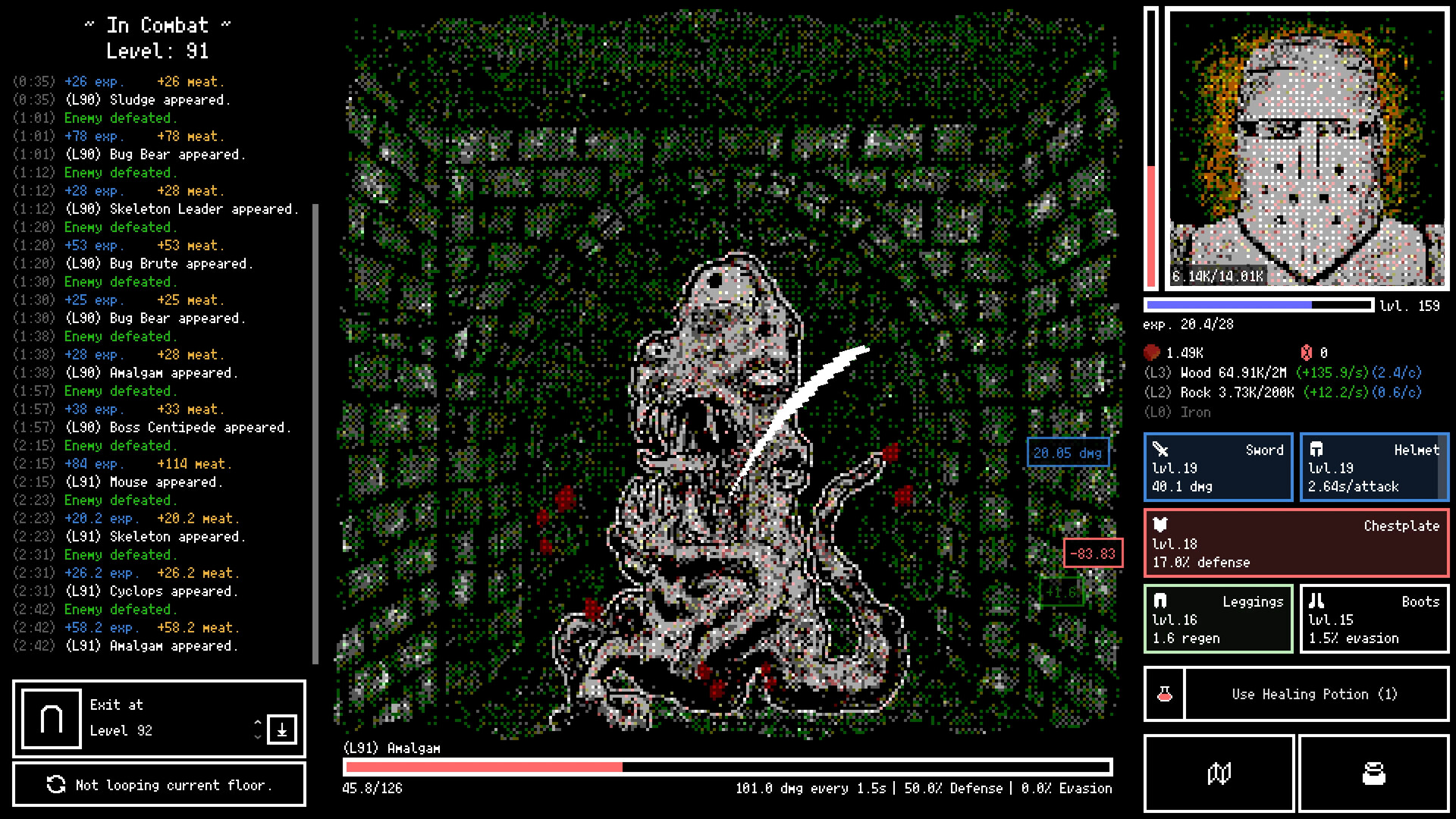
Horripilant is an idle dungeon crawler, which is probably something I should have known going into the game but only realized upon booting it up. I am kicking myself somewhat for doing “vibe checks” based on what I see and read promotionally before reading reviews, but considering most folks who play games don’t really know how to write a decent review, I tend to stray from the idea. With that said, upon starting the game you get a fairly rote introduction to some exponentially scaling cookie-clicker mechanics, all wrapped in a highly dithered, modestly macabre dungeon crawling aesthetic (complete with a big old face in the wall). As these sorts of idle games don’t appeal to me a great deal, I looked up some user reviews to see if the gameplay iterated on itself in any sort of meaningful way. While that has been teased (a number of reviews say the game leans more on its point-and-click elements once you’ve “overcome” a certain amount of the idle dungeon crawling), I’ve yet to make it there, having only progressed through around 50 of the presumed 1000 floors o the idle dungeon. The way to become stronger for this endeavor is not through leveling your character, but rather improving your gear, which requires either material grinding via click or through the use of passive minions. Certain equipment upgrades require high amounts of material, which might mean you need to upgrade your storage, which requires a material amount of meat, which can only be collected by slaying enemies in the dungeon. The systems all fold back in upon themselves, with an additional idle dungeon material that can be used to reset your entire player state with additional “quality of life” bonuses that allow you to collect materials faster, start the game with a set amount of basic materials, or boost the numbers reflected in the equipment upgrades.

…It’s terribly dull.

The only reactive or interactive part of the dungeon crawl is selecting items (which aren’t very useful) or hitting “weak points,” which can occasionally spawn and need to be triggered to deal extra damage. They aren’t very useful when you’re mowing down enemies in a fraction of a second (which is what this game becomes by your third reset or so), and you eventually get an upgrade that allows you to auto-click on material grinding, so it really does just feel like a program designed to engage your heat-sink. I am curious about the point-and-click aspects of the game (which are teased early on to a frustrating degree) but I haven’t really reached a point where that feels like its been added to the fold. I might leave the game running for an hour or so this evening to grind materials but I also despise that sort of game design… something something insanity something something different results. I want to stick with it but I am already getting the sneaking suspicion that I am "missing" game elements because the game itself purposefully obfuscates interactive elements in the "adventure" portions, my least favorite form of game design.


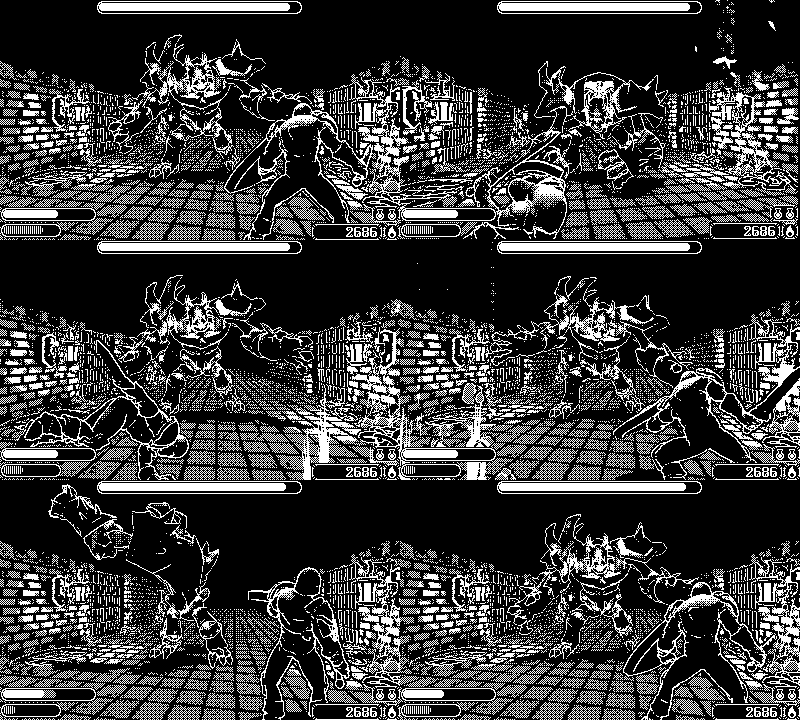
On a much more positive note, Gloom Gate is such a triumph. Sure, it’s not a game that uses the Playdate’s most iconic hardware feature to its greatest extent, but it is a genuinely moody and systems-rich game. I mean, it’s a 1-bit Punch-Out RPG, but in all the ways one might hope such a thing would fit in their pocket. While I do think that the parry mechanic being tutorialized before the block and charge attacks is a bit surprising, the fact that you have as many resources available to you relatively early in the experience and how enemies really do seem to have nuanced methods of approach and attack patterns is a level of variety I never thought I’d see in a Playdate game. Oh, and did I mention the characters and environments are rendered in 3D…?
Aside from its genuinely impressive presentation and solid gameplay, there’s not much in the narrative or music department, but for a bite-sized experience, there’s still a lot to love. I don’t know if I’d rank it over Fulcrum Defender, but the Playdate now has a nice collection of killer apps (approximately 24 in my estimation, not all are a part of official seasons) that could sway a potential niche console owner.

Obviously, Dragon's Dogma 2 is somewhat spooky but I'm only about four hours in. I don't have much to say.

18
Why would you post this in general gaming when there’s a subforum about Nintendo games right above this one? Do you have eyes? Can you comprehend reading? Can you come up with a topic less generic?

19
General Gaming / Re: Shocktober 7: NWR 3D
« on: October 08, 2026, 06:28:36 PM »
Spirit Ashes and Ashes of War (which are tied to weapons) are two separate things. Ashes of War are tied to the “weapon skill” input, but shields (especially those with parry) override the Ash of War input. At least, that was an issue I was encountering quite often as someone with a Sword and Board setup. This is because shields can also have Ash of War skills, though they’re much more situational.

20
General Gaming / Re: Shocktober 7: NWR 3D
« on: October 06, 2026, 11:11:39 AM »
I personally did not find it particularly enjoyable to learn the parry windows for bosses, especially when they have attack strings that can be hugely punishing/subject to lock-on. I found guard-follow-up attacks to be a more consistent and reliable strategy, with the understanding that parrying does not necessarily require the same level of endurance-building (the stat, not the concept) as a dedicated shield build. I am a great hammer/tower shield build right now and, as is the case with any good character-build-oriented combat system, a high strength/endurance build works extremely well for some fights and is terrible for others.

I guess I would say the most milquetoast advice: if you find yourself getting stuck in one place or against one enemy, there’s no shame in returning to it later, especially because the game’s only indicators of being in the “proper place” are maybe not-getting OHKOd, and whether or not you think you can stay alive long enough to overcome your particular obstacle with careful play. More specific advice would be crafting fire-pots: as a consistent form of elemental damage that can also occasionally splash onto opponents, they saved my ass far too many times in the early game and become a nice additive form of screwing with enemies in the mid-game.

21
Your address of horror as a genre is valid and I don’t love the “gorn” subgenre, myself. While I do find myself drawn to psychological or “elevated” horror a bit more (and o enjoyed back when Scream’s take on the genre had a bit more teeth to it than the hammy series it has become), I generally have an issue with more mean-spirited works as a whole. Not to say they lack merit and I won’t hate on anyone’s tastes in particular, but especially in a game such as this where one faction is reduced to subhuman and therefore worthy of such horrid fates, I find myself questioning the ethos of the developers. I really am hoping that this story is one of reflection and thematic growth, but in an era when Assassin’s Creed and other games were perfectly fine with killing vast numbers of perceived baddies (and the gaming space being filled with largely vapid narratives about resistance and the like), I’m preparing to be disappointed. I would hope that Tolkien’s address of good and evil would help elevate this game to a more contemplative position on vengeance and evil, but it’s looking unlikely.

22
Nintendo Gaming / Re: What is your favorite game this year?
« on: October 05, 2026, 10:17:06 AM »
A part of me feels the need to give Mischief Makers a try, considering it’s the N64 2.5D game everyone raves about. But I have noticed a certain bat-shaped chunk of your backlog that I also have not yet tackled. Once I’ve put a fair bit of time into The Middle Earth duology I might jump to those… except Dragon’s Dogma 2 calls to me more powerfully than almost anything I’ve touched this year.

23
General Gaming / Shadow of Mordor: A Mean-spirited, maybe self-aware game
« on: October 04, 2026, 01:05:38 PM »
Tl;dr What are your thoughts on the Middle Earth duology? I detail some of the ways I find the game to be mean-spirited, though I’m hoping the developers were actually self-aware enough to notice how unhinged their protagonist is.

I’m about six-ish hours into Shadow of Mordor, which was recently released on the Nintendo Switch 2 in a duology package(and had a 50% discount for preordering: 35 dollars, what a steal!). As someone with an affinity for Tolkien’s works and a vague curiosity about video game adaptations of the legendarium, I was too tempted by the general public’s affection for the Nemesis system to resist snagging these games. One might say I was tempted by the power of the One Ring… I figured I’d put this in General Gaming considering it’s not a Switch 2 exclusive, per se. I’m also ascribing to the Khushrenada ethos that “not everything needs to be added to an all-encompassing general thread.”

A few things in particular stand out to me about the experience so far, which even in the span of an additional hour or so of play have developed a bit more. First things first, this game is extremely “2010s Parkour-coded,” reminding me of the slog that was Assassin’s Creed: Black Flag (the only Assassin’s Creed game I’ve ever played, so yes, I know I am biased) in how the movement system operates. Black Flag felt a bit more restricted in the way some of its scripted missions allowed you to use parkour and how the parkour system worked with (or rather, butted-up against) nature, and the way Shadow of Mordor’s environments are structured feels a bit more free: mind you, there’s very little natural vertical structures and the game pretty much exclusively uses plateau cliff faces, but the amount of strongholds and ruins that pepper the landscape makes parkour feel like an always-accessible tool. With that said, it is somewhat surprising how freely you can move as a Ranger. Stealth and parkour really feel like integral elements that take cues from the aforementioned stealth action game and the momentum built upon the success of Warner Bros.’ other big video game adaptation of the time: the Arkham trilogy. At least, that’s what I’ve picked up from some stories from the game’s development. I need to get around to the Arkham trilogy at some point.

Second, the other aspect that echoes that 2010 game design is the combat. For a game so heavily weighted on combat, it doesn’t make a great first impression- you’re essentially mashing your attack input until you knock down an enemy and then switching to another enemy, considering the takedown mechanic and animation take a bit too long to execute in combat. This first impression is somewhat inaccurate, however, as a quick glance at the upgrade screen reveals the myriad input methods you can layer into combat. Executions reward your focus on mashing attack and reacting to parry opportunities, different forms of stuns and AoE attacks enter the fold, and finally, options for interacting with the Nemesis system reveal themselves to you. These upgrades are rewards for following the main narrative missions, so despite the game’s open world design, you are encouraged to try sticking to a main path. Given the play estimates featured on certain aggregate sites, the game doesn’t suffer too much from open-world bloat.

Which is perhaps good, because… well, outside of “hunting and gathering” side missions, combat is really the only thing this game has to offer. Sure, there’s stealth, timed, and stamina-focused side-missions that add a bit of variety to the mix, but it’s not enough variety to feel substantial, and it’s all in service of highlighting the various messed-up things you can do to Orcs and Uruks. This leads me to my main point, which is that this game is quite mean-spirited. You’re goring enemies on the regular, terrifying them with fire, mounted beasts, or “brutalize” prompts, and probing their minds for valuable intel (or branding them, a mechanic I’ve yet to unlock). The game is wont to focus on these actions, which are flashy and brutal in their design, and rewards you for engaging in such behavior. You can explode heads, for goodness sake. It makes me wonder if the developers were fully cognizant of how evil their protagonist is being portrayed. I’m assuming they do, seeing as the sequel tackles some ideas and gameplay mechanics related to power dynamics that feel like a further extension of moral corruption present here. I don’t know if I feel Tallion’s quest for vengeance justifies his wonton slaughter of Orcs, or if I’m supposed to take glee in watching him do so, but the more brutal the means of execution become, the more I feel that maybe this is a deliberate choice to signify how revenge is never truly satiated. I believe Celebrimbor himself says something similar, and this perhaps speaks to the placement of the game within the timeline of Tolkien’s legendarium.

Speaking of bad segues, this game’s most legendary element is most obviously the Nemesis system, and… yup. I get it. While I do feel this genuinely novel concept is somewhat hindered by the way encounters spawn and advance through time, I can’t help but be charmed by its execution. The first time I had an orc whose head I had cleaved come back with a gnarly battle mask and some nasty flavor text, I was smitten. I don’t know to what extent I’ll be able to push the limits of the system in this first game (as I still haven’t unlocked branding and I know the sequel has even more expansive interactions) but it’s novel enough in this smaller-scale environment that it makes coming across new nemeses continually surprising and enjoyable- even if the end result tends to feel fairly one-note.

I’m curious if others have experienced these games and what their thoughts might be. To boil it down to some specific talking points, did anyone find their experience to be similar or unlike the following…?
  • Simplistic combat with many options but rarely significant outcomes
  • Free, 2010s-era movement that emphasizes stealth
  • Revenge… bad?
  • Fun recurring Nemeses as the core conceit

24
General Gaming / Re: Shocktober 7: NWR 3D
« on: October 04, 2026, 10:13:36 AM »
Well, I’m planning on finally tackling Fatal Frame 5 this spooky season, as it seems now is as good a time as any to cross it off my backlog. I very much enjoyed the demo when I played it way back on Wii U and I wonder how it will play sans-gamepad viewfinder, though I’m sure you can achieve similar effects with gyro controls.

Fascinated by your take on Onimusha. The demo did not really appeal to me despite my recent Capcom kick so to hear it turns into a more open-ended experience is interesting. I felt the game’s combat from the demo felt like I was juggling too many balls, personally. But I have been sinking an unruly amount of time into Elden Ring and I do agree that some of its boss animations and statistics are unhinged and made me resort to cheese too often. That game is macabre enough to feel fitting for the month.

I know I have some other horror-themed games in my backlog: Kentucky Route Zero, Hellpoint, Labyrinth of the Demon King, and Darksiders 3 and Genesis, but the recently released Horripilant looks very appealing to me, and Soma is presently on sale for an absurd amount but I’ve already had the game spoiled for me so I fear much of the disorientation and mystery would be lost on me. While I will definitely pick up Horripilant, I have been craving a Resident Evil style game that isn’t bullshit like Crow Country or Signalis for some time. Maybe enough to get the original REmake, or maybe I’ll just replay REvelations Console Edition for old-time’s sake.

25
Nintendo Gaming / Re: What is your favorite game this year?
« on: October 01, 2026, 10:02:00 PM »
You've been on quite a gaming Odyssey, Khush. Curious to hear your thoughts on Xenoblade 2 if you finally get to it. I'm not the biggest Ocarina fan but I'm biting on the remake because of some of the quality of life enhancements and... let's face it, it does look gorgeous. I also would recommend Echoes of Wisdom, which is a little rough around the edges but delightfully so. It also has a great Hyrule map.

Looking at what I've played this year so far, it's a mixed bag. I'd say moment to moment, my favorite games this year have probably been Pragmata (new) and Ys Memoire: Revelations in Celceta. Other games have done neat things that I feel were worth celebrating, and while I loved Pragmata very much upon playing and completion, I look back on it and say "that was very fun," though not necessarily worthy of the glowing rating I gave it at the time. Maybe it does. I was very generous.

Meanwhile, Ys Memoire is just a super solid RPG with some very fun customization systems. It doesn't hold you hand and it also doesn't waste your time with ton of bloat. A rarity these days. I've played a fair few smaller indies, but I'm a bit disappointed to say that a number of glowing recommendations haven't quite hit the mark for me.


Pages: [1] 2 3 ... 146